Are Indian DISCOMs Having a Kodak Moment with Virtual Net Metering?
Shared solar and Virtual Net Metering can democratize clean power if DISCOMs embrace reform instead of resisting it.
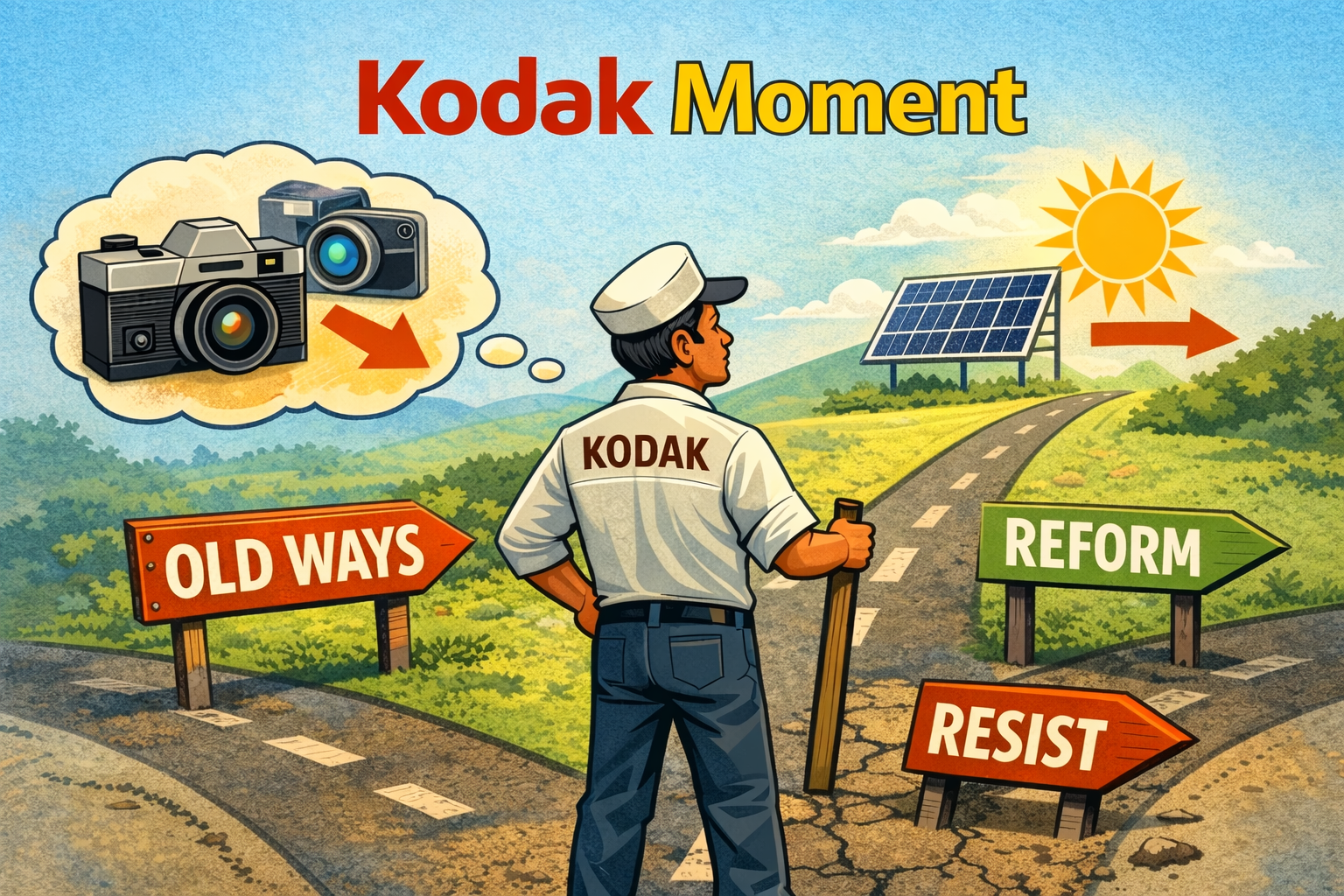
In 1975, a young Kodak engineer, Steve Sasson, built the world’s first digital camera. Kodak's leadership appreciated the invention, but feared it. Digital photography threatened their multi-billion-dollar film business, so the company quietly shelved the technology instead of embracing it. The result? Kodak became a global case study in how protecting today’s revenue can destroy tomorrow’s relevance.
Today, Indian DISCOMs (distribution companies) risk repeating this cautionary tale with Virtual Net Metering (VNM) and distributed solar reforms. Just as Kodak ignored the digital wave, several DISCOMs are delaying, discouraging, or resisting policies that democratize clean energy access, even when regulators and courts demand implementation.
“Innovation is often destroyed not by competitors, but by an organization’s own fear of short-term loss.”
- The Kodak Lesson
What Virtual Net Metering Actually Solves
For decades, rooftop solar only benefitted people with large, unshaded rooftops. Renters, apartment owners, institutions, and businesses in congested areas were left out.
Virtual Net Metering (VNM) changes the game. It allows a single solar plant, located anywhere within a DISCOM area, to virtually allocate energy credits to multiple consumer meters. Whether you live in an apartment or operate from a rented building, VNM lets you subscribe to shared solar capacity.Learn how VNM works.
“One plant, many beneficiaries. Solar energy is exported to the grid, and credits are allocated across eligible consumer connections.”
- Extract from state VNM regulations
The Kodak Parallel: Fear of Cannibalization
Kodak invented the digital camera and still failed because it feared short-term revenue loss. Many DISCOMs behave the same way with VNM. Shared solar reduces demand for high-tariff grid power, which cross-subsidizes other consumers. Instead of adapting their business model, some DISCOMs delay applications, avoid creating required portals, or impose procedural friction that discourages consumers.
In both stories, the threat is not technological, it is institutional fear. VNM offers transparent, consumer- friendly, data-driven solar access. DISCOMs, however, often perceive it as lost revenue, not an opportunity to modernize.
A Second Parallel: Auto Drivers Who Rejected Ola & Uber
When ride-hailing apps like Ola and Uberentered Indian cities, many traditional auto drivers reacted the same way incumbents often do. They argued:
“We’ve been in this business for 25 years. These new apps are only 5 years old, how can they change everything?”
But change did happen. Riders preferred the transparency, digital payments, GPS tracking, predictable pricing, and reliability of app-based transport. Many auto drivers eventually joined because they realized that resisting innovation doesn’t stop it; it only sidelines those who refuse to adapt.
DISCOMs are in a comparable moment. Like the auto drivers who initially dismissed ride-hailing platforms, some DISCOMs argue:“We’ve been managing distribution for decades, how can VNM change the system?”
Yet consumers, societies, institutions, and industries increasingly want cleaner, digital, decentralized options. Just as ride-hailing reshaped mobility,Virtual Net Metering is reshaping energy access. The question is whether DISCOMs will evolve with it or resist until the system forces them to change.
When the Referee Steps In: Courts vs DISCOMs on VNM
One of the most significant recent developments occurred in Maharashtra. The Maharashtra Electricity Regulatory Commission (MERC) penalised MSEDCL for failing to implement Virtual Net Metering, even after explicit regulatory directions.
Housing societies approached MERC, stating that MSEDCL had not accepted VNM applications and had not activated the mandated online portal. MSEDCL argued that they had challenged the regulations in the Bombay High Court. MERC noted that there was no stay order, meaning MSEDCL was still legally obligated to comply.
MERC imposed a penalty of ₹1,00,000 under Section 142 and directed MSEDCL to process VNM applications within 7 days, with an additional ₹6,000 per day for continued delay.
Read the full MERC order summary (Saur Energy)
This is one of the clearest examples of regulators pushing back against DISCOMs resisting VNM. The message is unambiguous: consumers cannot be denied the right to participate in shared solar.
Why India Cannot Afford a Kodak-Style Delay
VNM is not a minor policy tweak; it is a structural shift. It can unlock solar for millions who lack rooftops, reduce peak power demand, support grid stability, and accelerate national clean-energy schemes such as the PM Surya Ghar Muft Bijli Yojana.
When institutions fear innovation, courts and regulators must push the system forward. The future belongs not to organizations protecting yesterday, but to those building tomorrow.
“Solar shouldn’t depend on where you live, only that you choose to use it.”